

Qualifications for Elders
presents the precise qualifications and conditions required by Scripture

The Biblical Qualifications and Conditions for Elders in the Local Church That Belongs to Christ
The New Testament sets forth a clear, specific, and binding pattern for the oversight of each local assembly of the church that belongs to Christ. This pattern is not a matter of human tradition, denominational preference, or cultural adaptation. It is the inspired instruction of the apostles, given under the authority of Christ the Head of the church (Ephesians 1:22-23; Colossians 1:18).
The local church is autonomous, governed solely by the New Testament, and overseen by a plurality of qualified men called elders (also referred to as bishops/overseers and pastors/shepherds). These terms describe the same office and function, not separate ranks.
This article presents the precise qualifications and conditions required by Scripture, quoting the New King James Version in context, applying logic and the plain sense of the text, and refuting common deviations. The standard is objective, textual, and capable of being examined and defended on the face of the inspired record itself.
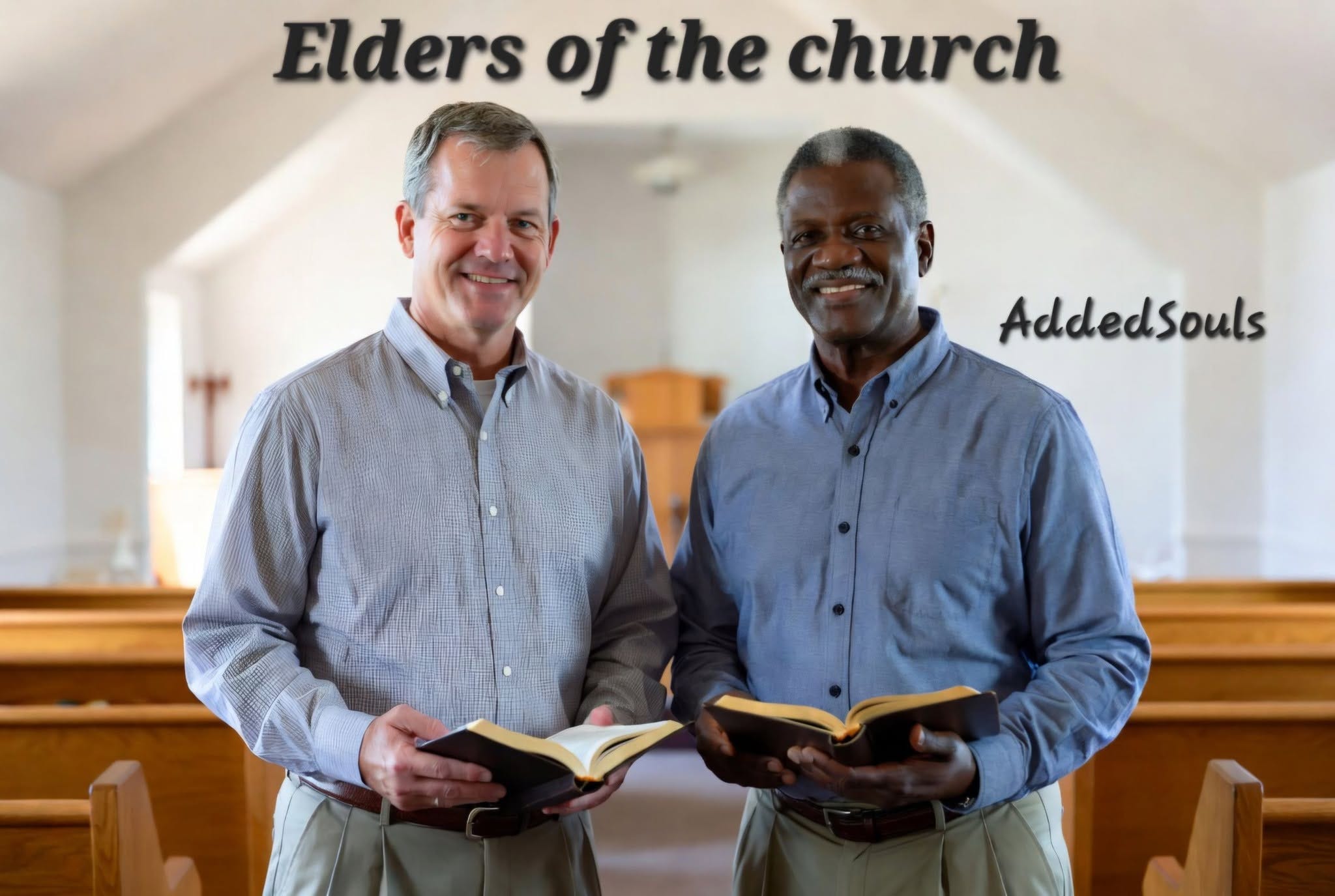
The Office and Its Plurality: Always a Minimum of Two
The New Testament never authorizes a single elder or “one-man pastor” system for any local church. Every time elders are appointed or addressed in connection with a local congregation, the language is plural.
- Acts 14:23 records the practice of Paul and Barnabas: “So when they had appointed elders in every church, and prayed with fasting, they commended them to the Lord in whom they had believed.”
- Titus 1:5 commands: “For this reason I left you in Crete, that you should set in order the things that are lacking, and appoint elders in every city as I commanded you.”
- Acts 20:17 shows Paul calling “for the elders of the church” at Ephesus (one church, multiple elders).
- Philippians 1:1 greets “all the saints in Christ Jesus who are in Philippi, with the bishops and deacons.”
- James 5:14 instructs the sick to “call for the elders of the church.”
- 1 Peter 5:1 addresses “the elders who are among you.”
Logic and common sense confirm the necessity of plurality. A single man is subject to personal blind spots, unchecked pride, and the danger of becoming a lord over the flock (1 Peter 5:3). Multiple qualified men provide mutual accountability, complementary strengths, shared burden, and protection against error. Scripture therefore requires a minimum of two elders in any local assembly that has reached the point of appointing overseers. A congregation without at least two qualified men remains under the temporary guidance of evangelists or the collective body while developing men who meet the standard (as Titus was instructed to “set in order the things that are lacking”). No New Testament example exists of a permanent single-elder church.
The Qualifications Stated in Context
The Holy Spirit supplies two parallel lists that together form a complete description. These are not suggestions; they are mandatory (“must be”).
1 Timothy 3:1-7 (NKJV):
“This is a faithful saying: If a man desires the position of a bishop, he desires a good work. A bishop then must be blameless, the husband of one wife, temperate, sober-minded, of good behavior, hospitable, able to teach; not given to wine, not violent, not greedy for money, but gentle, not quarrelsome, not covetous; one who rules his own house well, having his children in submission with all reverence (for if a man does not know how to rule his own house, how will he take care of the church of God?); not a novice, lest being puffed up with pride he fall into the same condemnation as the devil. Moreover he must have a good testimony among those who are outside, lest he fall into reproach and the snare of the devil.”
Titus 1:5-9 (NKJV):
“...appoint elders in every city as I commanded you—if a man is blameless, the husband of one wife, having faithful children not accused of dissipation or insubordination. For a bishop must be blameless, as a steward of God, not self-willed, not quick-tempered, not given to wine, not violent, not greedy for money, but hospitable, a lover of what is good, sober-minded, just, holy, self-controlled, holding fast the faithful word as he has been taught, that he may be able, by sound doctrine, both to exhort and convict those who contradict.”
These qualities are observable, character-based, and primarily about proven maturity rather than formal education or natural talent (except the ability to teach and hold the faithful word). They must be present before appointment. The congregation, guided by the Word, examines a man’s life publicly and privately.
Husband of One Wife and Faithful Children
An elder must be “the husband of one wife” (literally, a one-woman man - current and actively married, lawfully). This requires that he be a man who is married to one wife and is faithfully devoted to her alone. The phrase excludes polygamy, which was known in the first-century world, and requires sexual and relational fidelity. The phrase also demands a condition for office that must be honored due to insight necessary for fruitful practices.
Linked to this is the management of his household: “one who rules his own house well, having his children in submission with all reverence” and “having faithful children not accused of dissipation or insubordination.” The parenthetical explanation in 1 Timothy 3:5 supplies the logic: household management is the proving ground for church oversight. If children still live under the man’s authority (in the home and under his parental rule), they must be faithful (believing, submissive, not wild or rebellious). Adult children who have left the home and are independent are no longer under that direct authority in the same sense; the qualification focuses on the demonstrated capacity to lead those under one’s charge. A man whose home is disorderly while children are under his roof has not proven the skill required to shepherd the household of God.
This standard is both protective and practical. The local church is a spiritual family. A man who cannot lead his own family in godliness cannot be trusted with the more complex and eternal responsibility of the flock.
Not a Novice
Scripture expressly forbids appointing a recent convert: “not a novice, lest being puffed up with pride he fall into the same condemnation as the devil.” A novice lacks the tested experience, doctrinal depth, and proven character that come only with time under the Word and in the life of the church. Elevating an immature man invites pride, doctrinal instability, and harm to the flock. Maturity is measured by consistent fruit over a sufficient period, not by chronological age alone or by formal training.
Additional Character Requirements and the Ability to Teach
The remaining qualities form a coherent portrait of a man who is above reproach: temperate, self-controlled, respectable, hospitable, not given to excess with wine, not violent or quarrelsome, not greedy, gentle, just, holy, and holding fast the faithful word so that he can both exhort and refute error. He must also possess a good reputation with outsiders. These are not optional virtues; they are the non-negotiable conditions for appointment.
Benefits of Faithful Shepherds
Faithful elders who meet these qualifications bring indispensable benefits to the local church. They “shepherd the flock of God which is among you, serving as overseers... being examples to the flock” (1 Peter 5:2-3). They protect the congregation from “savage wolves” and false teachers (Acts 20:28-31). They watch for the souls of the members “as those who must give account” (Hebrews 13:17). They equip the saints, maintain sound doctrine, provide wise counsel in times of crisis, and model godly living in the home and community. A plurality of such men distributes the load, multiplies wisdom, and creates a stable, protected environment in which the church can grow in faith and number. Without them, the assembly is exposed to division, false teaching, and the absence of mature oversight that Scripture regards as essential once qualified men are available.
Refutation of Common False Arguments
- The claim that a single “senior pastor” is sufficient contradicts every New Testament appointment and address of local church leadership. The consistent plural language is not accidental.
- The assertion that women may serve as elders ignores the explicit male language (“husband of one wife,” “man,” “he”) and the complementary teaching that restricts the authoritative teaching and oversight role to qualified men (1 Timothy 2:11-12; 3:1-2).
- The idea that the household qualifications are merely ideal rather than mandatory overlooks the repeated “must be” and the logical connection drawn by the apostle himself.
- Arguments that cultural differences or modern educational credentials supersede these character requirements have no textual support. The qualifications are rooted in unchanging moral and spiritual realities.
- Suggestions that a man may be appointed while still a novice “for the sake of expediency” directly violate the stated warning against pride and the devil’s condemnation.
These qualifications are not legalistic hurdles invented by men. They are the Holy Spirit’s revealed standard for protecting the church that belongs to Christ. When followed, they produce stable, healthy local assemblies under the care of proven, faithful shepherds. When ignored, the congregation suffers the predictable consequences of inadequate or unauthorized leadership. The New Testament pattern remains the only authoritative rule.
Thank you for your kind attention